

Cast Iron Guide
Cleaning & Care
Your Lursta piece is cast to last for generations. Here you'll find what you need to get started: recipes, cleaning tips and how to season your pans.

Troubleshoot & restore
If your cast iron looks a bit worn, it's easy to fix. We'll show you how.

Tips for cooking
Our best tips for getting on with your cast iron pan.

Cleaning
We'll teach you how to clean Lursta cast iron in a few simple steps.

Seasoning
What it is, why it's important & how to maintain a seasoned cast iron pan for decades of cooking.
Cooking with cast iron
Before you start cooking
Cast iron likes time, and it pays to give it some. A properly heated pan gives a more even sear, better flavour and easier cooking.

Warm up gradually
It can be tempting to crank up the heat right away, but cast iron benefits from patience. Increase the temperature gradually to avoid warping the pan or unnecessary food sticking.
Make sure the pan is hot
Test with a few drops of water. If they dance on the surface, you're ready. Add fat to the pan, listen for the sizzle, and start cooking.
When cooking
The pan is hot, the ingredients are ready and the kitchen is starting to smell good. A few simple tips for a proper crust, and for letting the cast iron do its job.

Make space for the food
Don't put too much in at once. Cast iron retains heat well, but if you overcrowd the pan, the temperature can drop. It's better to fry in batches, then you'll get a nice crust instead of boiled pieces.
Let it take time
Don't stir too much. Let the ingredients rest for a while so a nice crust can form. Cast iron gives the best results when you dare to trust the material.
Adjust heat as needed
When the pan is hot and you are frying more delicate ingredients such as fish, pancakes or eggs, it can be a good idea to lower the temperature a little. Cast iron retains heat anyway, so the food will continue to cook evenly. You often need less heat on the hob than you think!
After cooking
When the food is eaten and the fire has died down (or the stove has cooled), it's time for the last step: looking after your cast iron. It doesn't have to be complicated. With the right habit it takes a few seconds and makes all the difference.

Wash gently but effectively
Use hot water and a brush or sponge. Most of the time that's enough. But if you waited a bit too long, or something is really stuck, a small drop of mild washing-up liquid won't hurt. It loosens stubborn bits without damaging the seasoning, as long as you oil the pan again afterwards.
Wipe dry immediately
Cast iron does not like to be wet. Dry the pan thoroughly immediately after cleaning, preferably with a kitchen towel or using the residual heat from the hob.
Oil is your friend
While the pan is dry and still warm, rub in a thin layer of oil or other cooking fat. Wipe off the excess with kitchen paper. That keeps the surface in good shape and protected from rust until next time.
FAQ
FAQ
General
No. Cast iron has no synthetic coating and no added chemicals. The black surface is oil that has been baked on.
We cast locally, by hand and in small batches, from recycled iron. Every piece is ground and checked at the foundry in Lyrestad before it's seasoned. It costs a little more, but it's made to be used every day for many years, and then handed on.
The black surface is oil baked into the iron. It protects against rust and helps food release, with no PFAS or other synthetic coating. The surface gets better the more you use the pan.
Our cast iron is made from locally recycled iron using renewable energy, and seasoned with no PFAS or other synthetic coating. We are the first in the world to cast iron in moulding sand without added coal, which cuts carbon emissions from casting by more than 85 percent. And the products are made to last for generations.
The short answer: it's solid cast iron, and that's exactly what lets it hold heat so well and give such a good sear. The weight is part of how it works.
We also know not everyone loves a heavy pan, so we work at designing smarter. Our handles are balanced to feel lighter in the hand.
We're also experimenting with lighter cast iron, trying to bring the weight down without losing what makes cast iron good: heat retention, durability and feel. More on that soon.
Yes, that's fine
Cooking
Yes, absolutely.
For short periods, yes, like a splash of wine or lemon. Long simmering with lots of tomato or vinegar can wear the seasoning, especially on a new pan. If the surface looks dull afterwards, season the pan again.
We recommend moving the food to another container. Moisture and acid from the food can cause rust or wear the surface if it sits in the pan for a long time.
Care instructions
Not to worry. Scrub off the rust, dry it well and season it again. Your pan isn't ruined, it just needs some attention. See our Cast Iron Guide for how.
Not at all. It's residue from the seasoning and means your pan is still settling. Just keep using it; it will disappear over time and is completely harmless.
Completely normal. It's the pan's patina building up. With regular use the colour evens out and the surface gets stronger.
Yes, a small drop of washing-up liquid is fine. Modern washing-up liquid isn't as harsh as it used to be and won't damage a well-seasoned pan.
Just don't use too much, and avoid it altogether on new pans while the surface is still settling. Water and a brush usually go a long way.
Always dry the pan properly after washing.
Yes. All our cast iron for cooking is seasoned before it leaves the foundry, with no PFAS or other synthetic coating, and ready to use straight out of the box. And the surface only gets better with time.
We use a cast iron alloy that holds heat well and spreads it evenly, so food cooks across the whole surface and not just where the heat hits. Every piece is hand-cast and checked at the foundry in Lyrestad.
Wash with hot water and a brush. A small drop of washing-up liquid is fine. Dry it straight away and rub in a thin layer of cooking fat while the pan is warm. Read more in our guide to cleaning.
Technical issues
Yes, cast iron is magnetic and therefore works perfectly on induction hobs. Our cast iron pans work on all heat sources, including open flame and induction.
Looked after properly, it lasts for generations. We like to think of it as something you borrow from the next generation.
It means we never use synthetic coatings or PFAS. The smooth black surface is built up from oil baked into the iron, and it only gets better the more you use the pan.
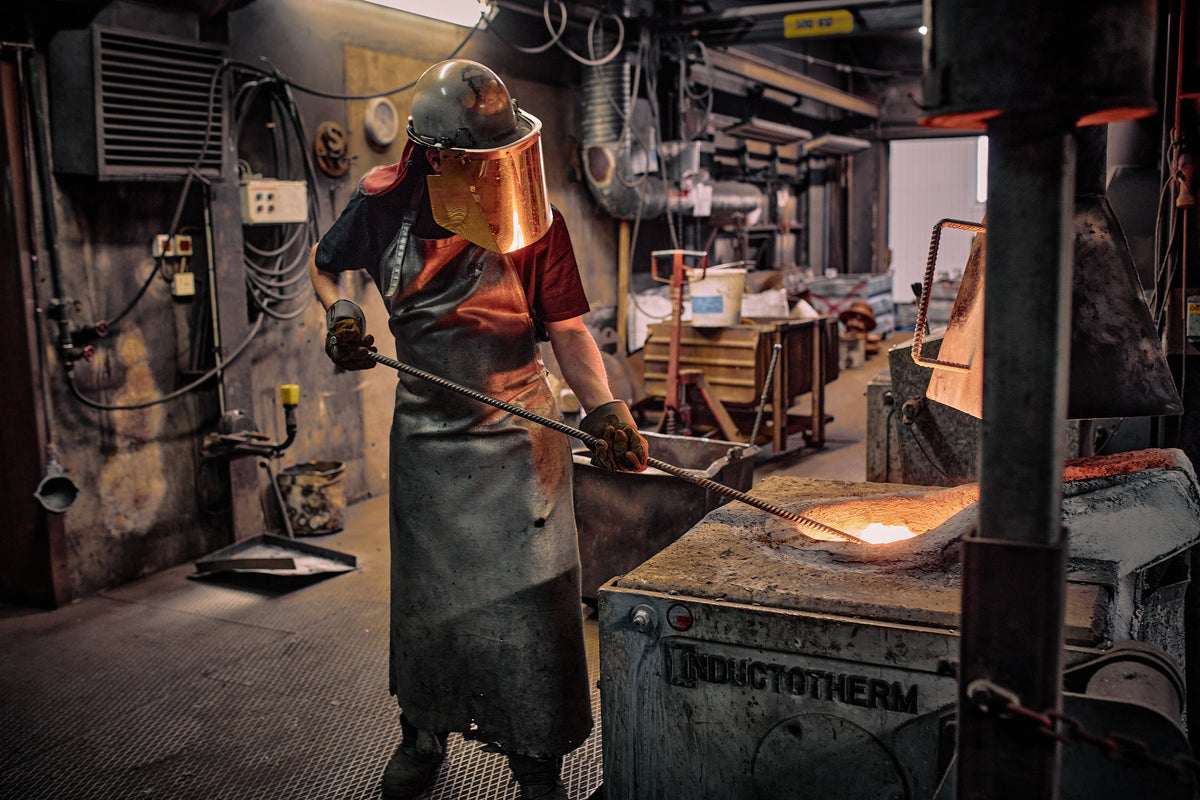
Every cast iron piece from Lursta is made by hand at the foundry in Lyrestad. We make a sand mould for each individual piece. The mould is used once, then broken up, and the sand is recycled into new moulds, so every casting is one of a kind. Molten recycled iron is poured into the mould and left to set. Then each piece is ground, cleaned and seasoned before it leaves the foundry.