Cast iron pancake pans – how to get your pancakes right
A cast iron pancake pan holds an even heat from the first pancake to the last. But cast iron behaves differently from a thin frying pan. Here's what's different, and how to get even, crisp-edged pancakes.
What is a pancake pan?
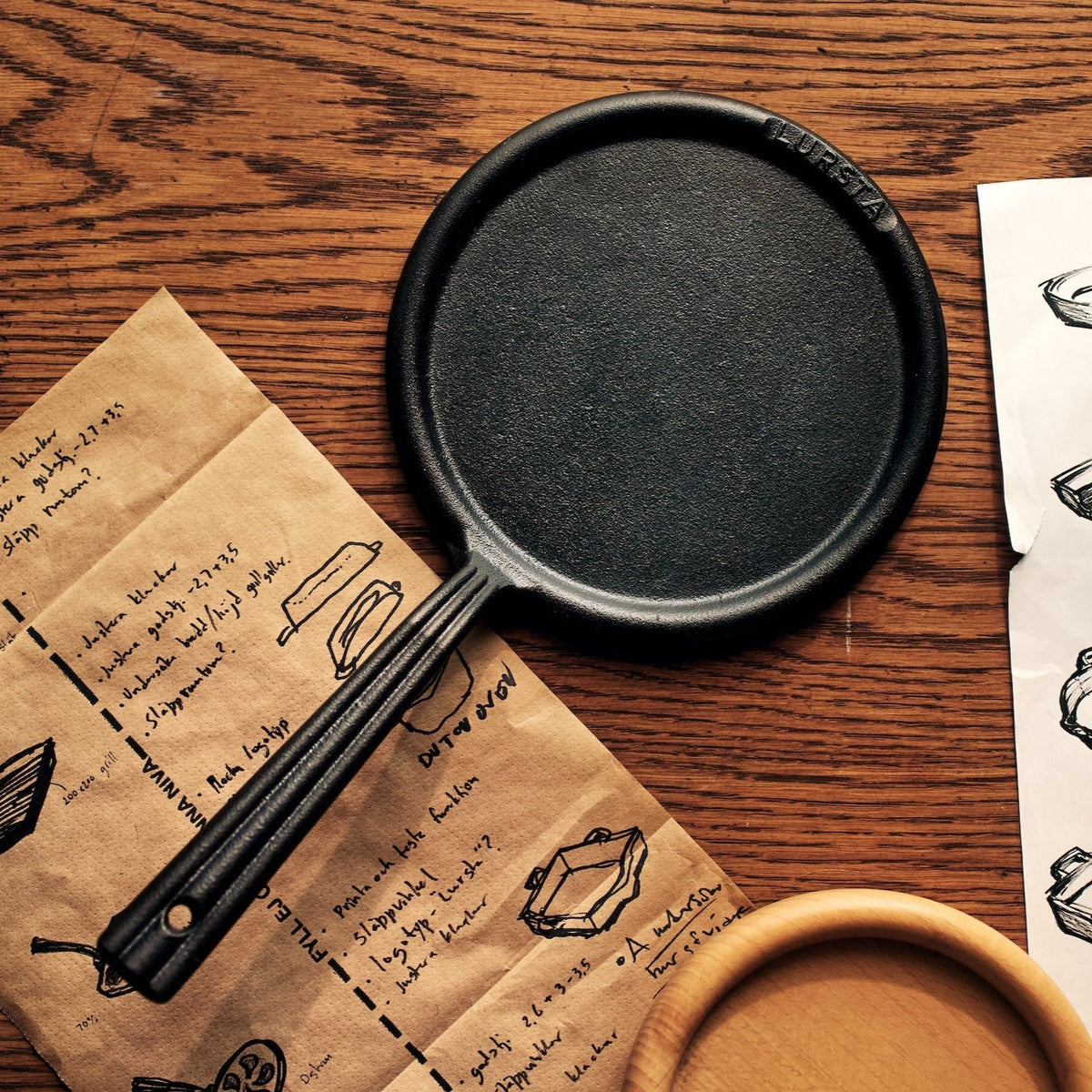
A pancake pan is a low, round pan with a short rim and a long handle. The low rim makes it easy to get under with a spatula and flip. A plättar pan instead has several small hollows, so you can fry several small Swedish pancakes at once.
Why cast iron for pancakes?
Cast iron stores heat. When you pour in cold batter, the temperature drops less than in a thin pan, so the pancakes get an even colour from edge to edge, batch after batch. The iron handles high heat and has no coating to wear off.
How to fry pancakes in cast iron
- Rest the batter for 15–30 minutes. The flour swells and the pancakes are easier to flip.
- Preheat the pan over medium heat for about 5 minutes. Flick a little water onto the surface. If it sizzles and the drop dances, the pan is hot.
- Butter the pan before each pancake, or stir melted butter into the batter.
- Pour in the batter and tilt the pan so it spreads in a thin layer.
- Flip once the edges have come away and the surface is no longer shiny.
- Turn the heat down a little after a few rounds. The cast iron keeps getting hotter.
Want a recipe? Try butter-fried pancakes from childhood.
Why is the first pancake always the worst?
The pan isn't evenly hot yet, and the fat hasn't spread across the whole surface. Give the pan a few extra minutes on the stove before the first pancake, and count it as a test.
Why does the pancake stick?
- The pan wasn't hot enough when the batter went in.
- There wasn't enough fat.
- You flipped too early. Wait until the edge lets go on its own.
- The cooking surface needs building up. Season the pan again, see how to season a cast iron pan.
After breakfast
Rinse the pan in hot water and dry it properly. Wipe on a thin layer of neutral cooking oil while it's still lukewarm. Every time you cook with butter or oil, the surface gets a little better.
ARVET and Plättlaggen
ARVET is our pancake pan, designed by John Andersson together with chef Stefan Ekengren. It's slightly smaller than standard, light enough to lift with one hand and heavy enough for an even cooking surface. ARVET received the Formex Sustainability Award 2024.
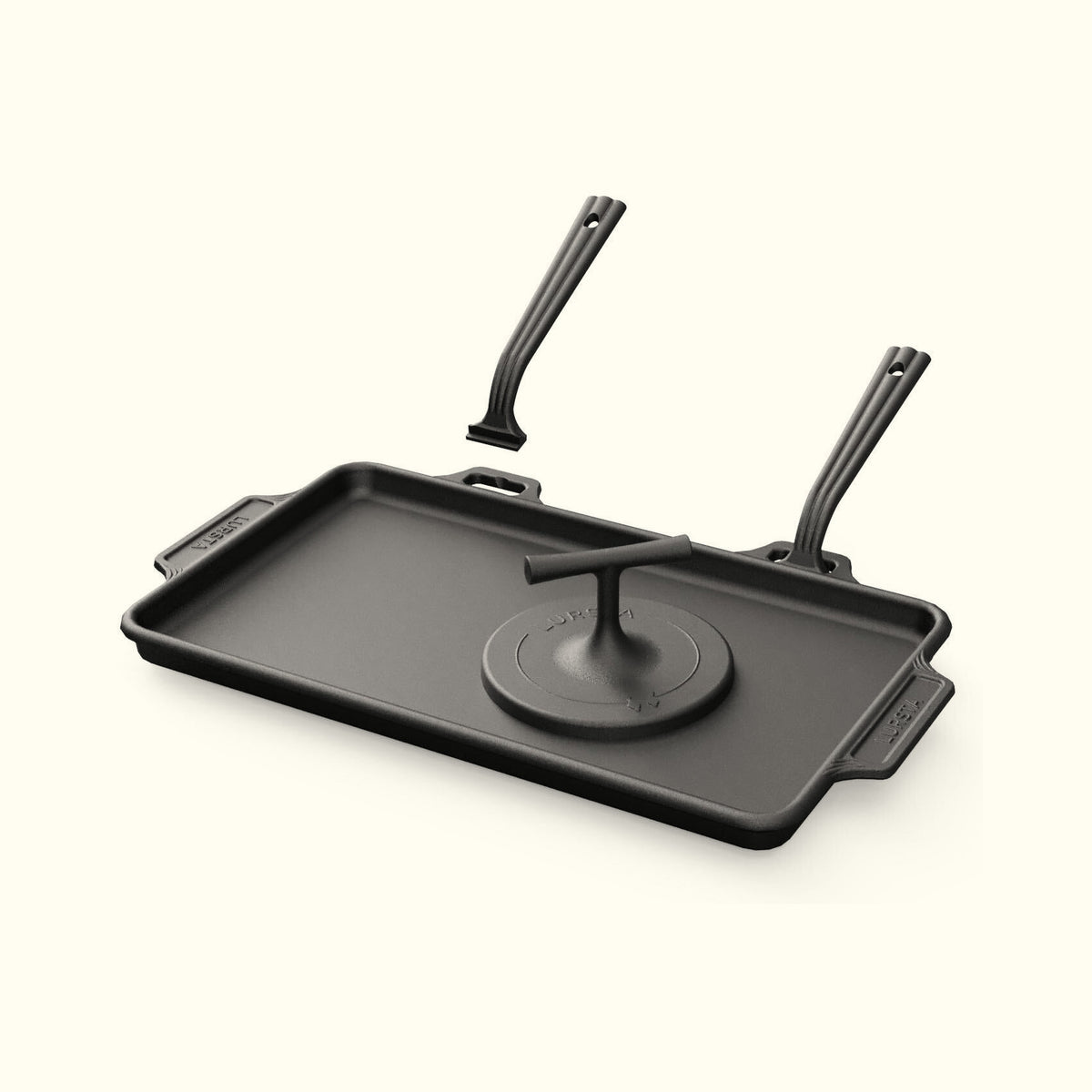
Plättlaggen fries seven small pancakes at a time and has a removable handle.
Both are hand-cast in Lyrestad from recycled iron and arrive seasoned and ready to use, with no PFAS or other synthetic coating. If you want both, they come together in the bundle One Batter, Two Irons.