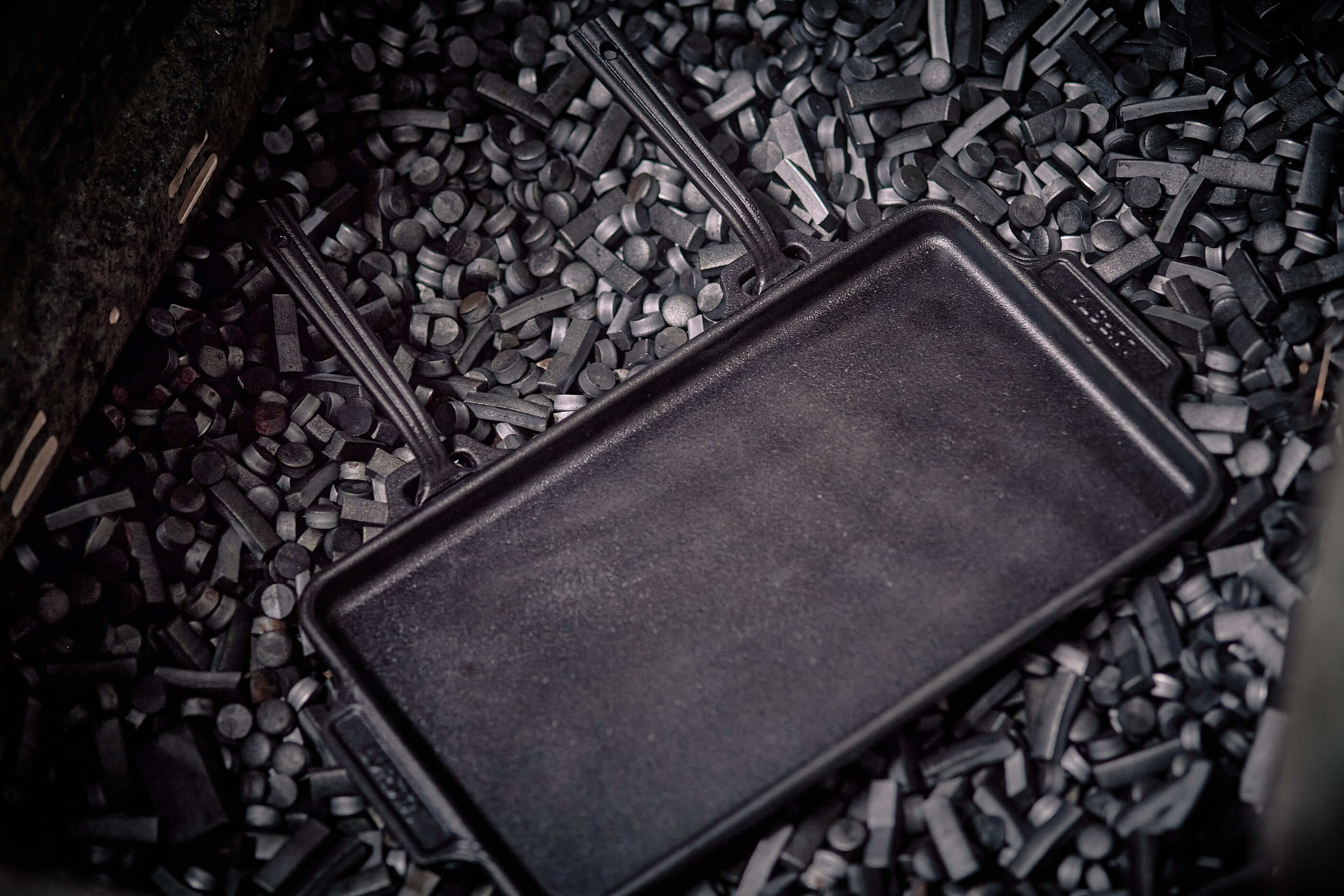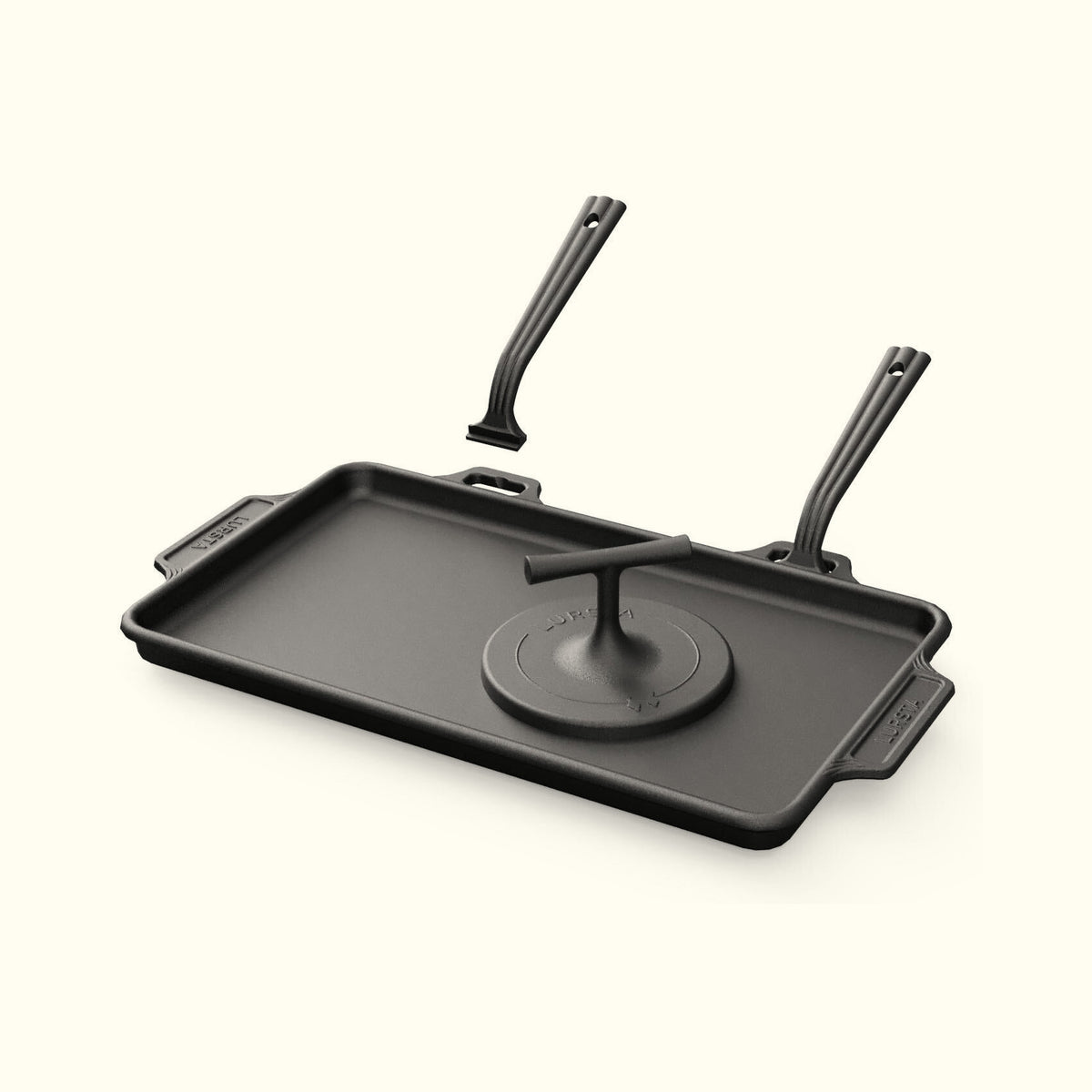
How we make Lursta cast iron
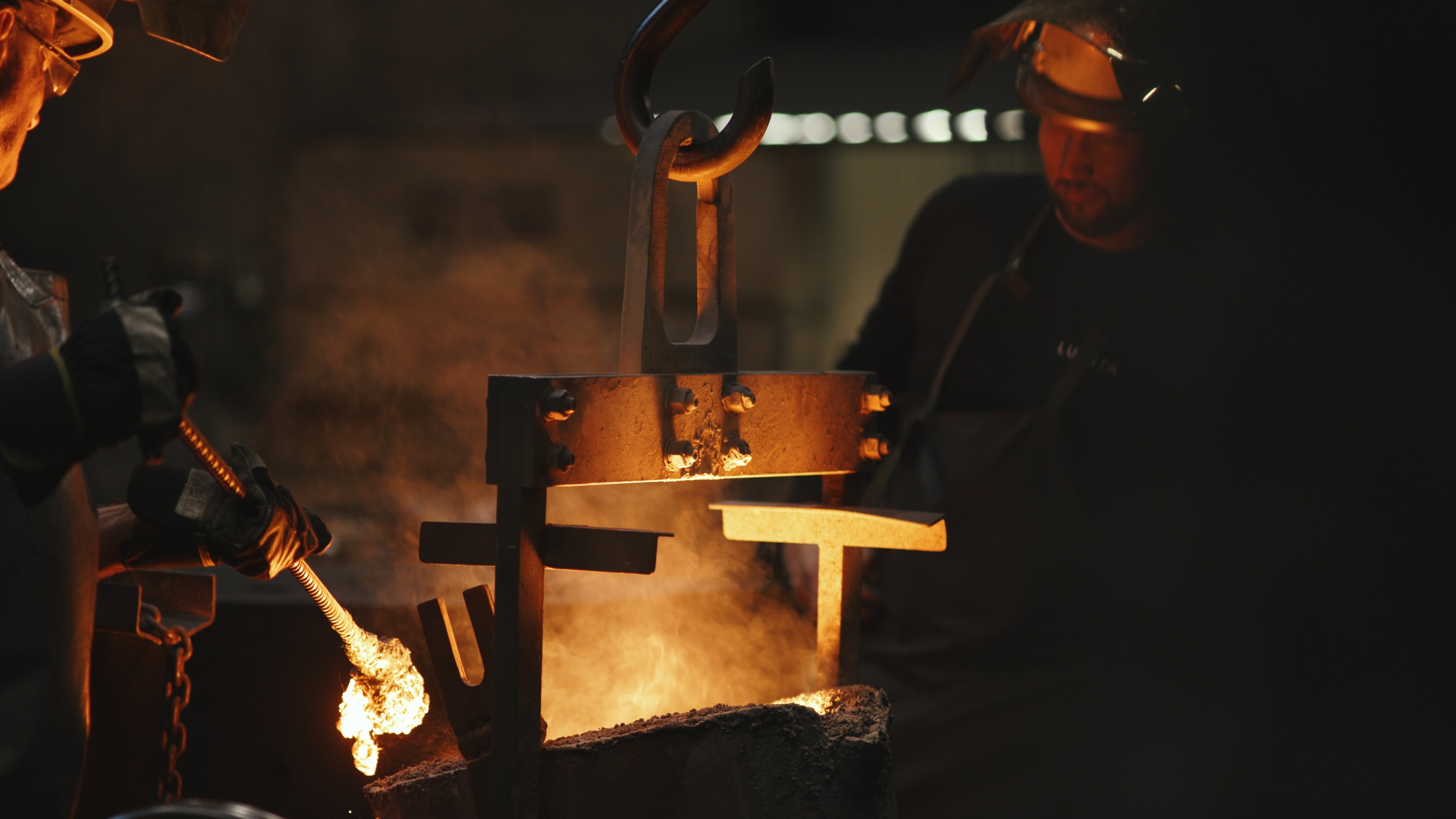
The way we see cast iron is shaped as much by the place as by the process.
Still in Lyrestad, refined over generations of craft, every piece is made with one clear purpose: to be used, and to last.
Here are some of the steps behind our work, and why they matter.
DESIGN, FORM & FUNCTION
Every product starts close to production.
Our design goes back to the Swedish movement of the 1920s, when form, material and craft were developed as one. Designers like Gunnar Asplund, Anna Petrus and Simon Gate worked directly with industry to find new expressions in existing materials.
That approach lives on with us.
Form isn't developed in isolation, but in constant conversation with the material, the weight and the use. We start in the craft and let ideas take shape from there.
THE RAW MATERIAL
Every Lursta product starts with recycled Swedish iron, sourced locally.
Working with recycled material isn't a compromise. It's a deliberate choice, for its properties and for where it comes from.
By choosing, combining and adjusting different kinds of recycled metal, we build a material with precise properties.
The way flavour is built in a kitchen, performance is built here.

HAND MOULDING
Every product starts in its own hand-packed sand mould. No two are exactly alike.
What matters is the quality of the sand, its moisture and grain size, and above all how the iron is led in.
Carefully designed gating systems control the flow, speed and direction of the iron, which keeps defects to a minimum and gives a dense, well-balanced material.
It's work that takes precision and experience.
Small adjustments at this stage make a big difference to the result.
Each mould is adapted to the function and geometry of the piece.
More work, and a better result.
MELTING & CASTING
This is where material and form meet.
The iron is melted using 100% renewable energy and cast under tightly controlled conditions.
Temperature, timing and flow decide how the material fills the mould and how its structure builds up. When the process is in balance, the result is dense, stable cast iron that holds a lot of heat and spreads it evenly.
You notice it straight away when you cook, and over the years.

GRINDING
After casting, every piece is worked by hand.
Surfaces, edges and transitions are defined with care, and the final balance takes shape.
This is where the feel is decided.
How the weight is spread. How it meets the hand. How it moves in use.
Small deviations are corrected. Adjustments that might seem minor, but make all the difference to how the piece feels.
FINISHING
The last step is quiet, but it matters.
Every piece is seasoned with three layers of organic cold-pressed rapeseed oil from the area, giving a natural cooking surface that develops over time.
Nothing is added that doesn't belong.
The aim is a surface that only gets better the more it's used.
THE RESULT
Much of what defines a piece of cast iron can't be seen once it's finished.
But it's there: in the weight, in how the heat is held and spread, and in how the piece behaves over the years.
When the process is done right, the result speaks for itself.