Gravitas – the mortar that started Lursta
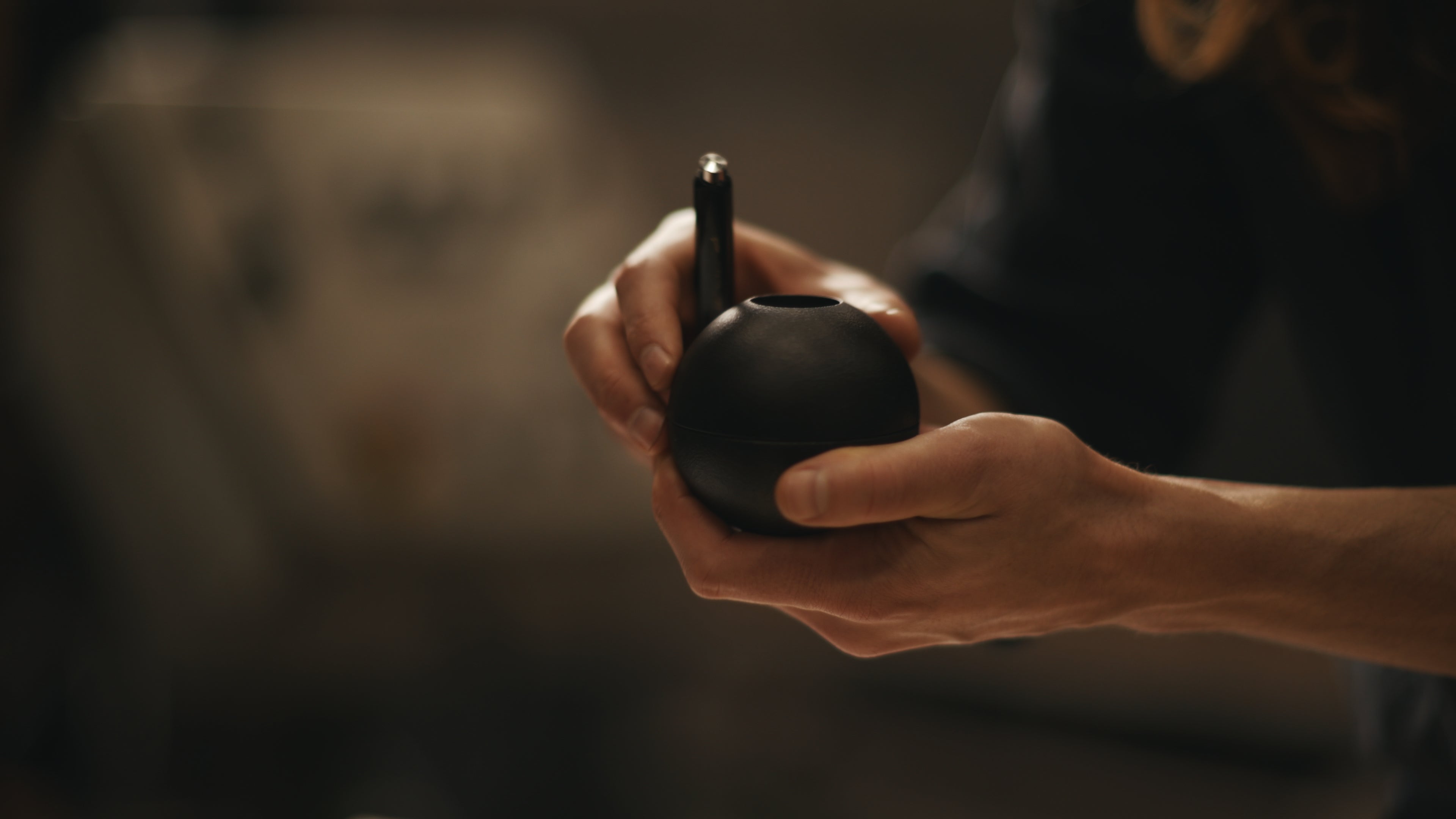
Most people think well of cast iron. The first objection is always the weight. When designer John Andersson visited a local foundry as a student, it sparked a lasting fascination with the principles, craft and possibilities of casting, not least its potential for sustainable production and technical invention. Wanting to get closer to this kind of making, and actually needing a mortar, John started sketching a new kind of product that combined the strengths of a mortar with the simplicity of a pepper mill. Inspired by the old way of grinding mustard with a heavy ball, he let the weight, usually seen as the drawback, be the very thing the handheld single-serve mortar was built around. The weight became an essential part of how it works.

Sustainability is largely about how you source raw materials and what energy you run production on. But there's also a lot of untapped potential in design. The stronger the emotional bond an object creates with the person using it, the more care they'll give it. Wanting people to look after, repair and eventually pass on a product should be a natural starting point for all design. Better choice of materials follows, along with a broader view of quality and stronger reasons to keep inventing. From the start, the ambition with Gravitas was to show that new, inventive solutions can be combined with design people feel something for, to make something that doesn't lean on a passing trend but stands confidently on its own, in function and in form.
The idea was patented and then waited for its moment, until John got in touch with Andreas Stridkvist at Lyrestads Gjuteri. In design circles, John had been told about one of Sweden's few remaining foundries. It was a lucky match: Andreas, a third-generation founder, was interested. Since the 1950s the foundry had combined advanced industrial work for Swedish engineering with complex castings of artworks and restoration projects, and John saw that this was the perfect meeting point of deep technical knowledge and respect for design.

This is how the mortar works. Drop a portion of whatever you want to grind through the opening at the top. Then hold the mortar in your hand and turn or shake it, so the weight of the solid iron ball inside works on your spices. The ball crushes or grinds the contents, depending on how long you turn or shake. You can tip the mortar without everything pouring out at once. The inside of the top half lets out just the right amount, while the ball blocks most of the opening. The mortar stays securely closed thanks to a threaded overlap between the halves, which unscrew easily for cleaning.

The collaboration that Gravitas began grew naturally and became the foundation for a new company and a new brand, where design and production happen side by side, in constant conversation. The way Gravitas went from idea to castable product has become typical of how Lursta works today: design, problem-solving and production running in parallel. It may sound obvious, but today it's more the rule than the exception that drawings made in one place are sent to the other side of the world, ordered by someone in a third place. The parties rarely meet, and there's seldom any real understanding of what the production actually involves. The result reflects that.
Judging by the response, this classic way of working, which feels obvious to us, is in demand but very rare today. We want to work the way Näfveqvarn, Orrefors and Svenskt Tenn did around the 1920s, when they brought in Sweden's leading artists and designers to combine generations of craft with the new design thinking of the time. That movement put Sweden on the map as a design nation, and for us it's the way forward. It leads to more sustainable products with a wiser relationship to consumption and how long things last, and to more technically refined solutions, where the experience of production and the vision of design get the most out of each other. Working this closely, we keep finding technical solutions we'd otherwise never have dared to consider, and room to push the design further, because the designer knows the nature and limits of production from the start.
Through careful design work, these ambitions have resulted in an everyday object that's close to a piece of art. Gravitas is designed to outlast changing trends, made well enough to be handed on to the next generation, and an example of patented invention born from real collaboration between design and production.